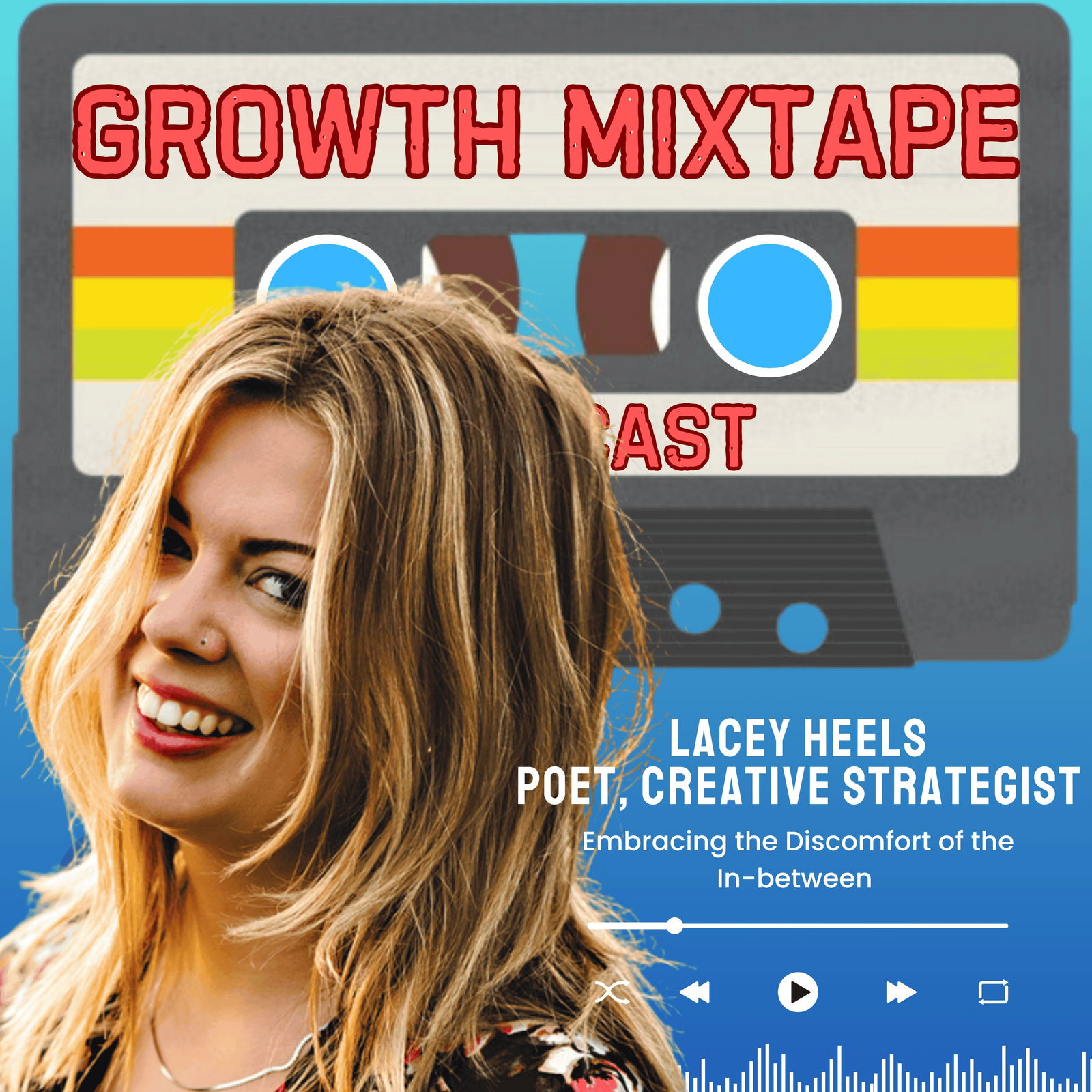
Today we talk to Lacey Heels —writer, creative strategist, and the author of The Rebirth Rituals.
This wasn’t a planned conversation. In fact, a few short weeks ago, we’d never even met. But after a few chance encounters (and some beautifully-timed serendipity at a retreat in the woods), Lacey’s book landed in my hands—and I couldn’t put it down.
We talk about that strange, messy, powerful space in between who we’ve been and who we’re becoming. Lacey opens up about the collapse that led her to start over, the fears that come with shedding an old identity, and how journaling and creativity helped her find clarity, healing, and direction.
If you’re sitting in the “what’s next” part of your life or career, this conversation is for you. It’s about rediscovering the parts of yourself you’ve left behind, honoring the discomfort of not knowing, and trusting that the through line will appear—if you just keep going.
Please enjoy, Lacey Heels.
Key Takeaways
The magic of in-between moments: Lacey describes the “liminal space” we all find ourselves in when one chapter ends and the next hasn't fully begun—and why learning to sit with the discomfort is essential.
Being known for one thing... and craving something else: Many of us reach a point in our lives or careers where we feel the urge to reinvent ourselves, even when we’re unsure what comes next.
The collapse before the rebirth: Lacey shares her experience of burnout after shutting down her business, and how letting go of what no longer fit made space for something new to emerge.
Start messy and trust the process: Whether it's journaling, creating, or starting a new path, Lacey encourages us to begin before we have it all figured out—the clarity comes in the doing.
Journaling is self-leadership: For high performers who are used to intellectualizing everything, journaling can be a powerful tool for self-awareness, emotional regulation, and reconnecting with purpose.
Run small experiments: Instead of waiting for “the answer” to appear, Lacey suggests taking small, low-stakes steps toward the life you want. Try something. See how it feels. Adjust.
You’re allowed to start over: Sometimes we need to be reminded that it’s not only okay to pivot, it’s necessary. Reinvention isn’t a failure—it’s part of being human.
Creativity as a healing force: Whether it’s writing, gardening, painting, or music, making space for creative expression helps us integrate our experiences and find meaning in them.
Connect with Bob Mathers
Website
LinkedIn
Instagram
The Restless Leader Newsletter on Substack: https://bobmathers.substack.com/
Links & Resources
Lacey on Linkedin: https://www.linkedin.com/in/laceyjheels/
Lacey on Substack: https://www.awildhoney.com/
Lacey on Instagram: https://www.instagram.com/awildhoney/
The Rebirth Rituals: https://www.amazon.ca/dp/B0F931KTTQ
Speaker 0
I was in my own, like, version of collapse and being known for something, having mastered certain things, and no longer wanting to do that anymore, which is like a hard thing to face in the mirror. Because I find with a lot of especially high functioning, self aware people who have, you know, built something meaningful, that have become known for something, the the hardest part and the biggest fear is around dismantling what you built or dissolving what you were and letting go of it. Speaker 1
Welcome to the Growth Mixtape, and I'm your host, Bob Matters. Now before we get started, I'd love to ask a quick favor. If you like what we're doing here, please follow or subscribe to the podcast wherever you listen. It helps you find new episodes quickly in your feed, and it helps promote our profile so we can continue bringing you amazing guests like this one. Please share this episode with anyone you think needs to hear it. And if you want even more of the awesomeness we're serving up here, join my one hundred percent free Substack at substack dot bob mathers dot com or grab it in the show notes. Okay. Let's get into it. Today, we talked to Lacey Heals, who's a writer, creative strategist, and author of the rebirth rituals. This is a conversation I did not see coming, but it found me just when I needed it most. We talk about embracing the discomfort of the in between, that place we all find ourselves in when we wanna become known for something other than what we've spent our life doing. Lacey shares how writing helped her find her voice and how staying curious is the best way to experiment our way into what's next. If you've ever felt like there's something else you're supposed to be doing, but you're just not sure what it is yet, you're gonna love this conversation as much as I did. Please enjoy Lacey Heels. Lacey Heels, welcome to the podcast. I'm, I'm excited about this one. Speaker 0
Me too. Hi, Bob. So good to see you. Speaker 1
Yes. Well, I thought I'd first off, maybe I'd start by giving a little bit of context for this, conversation because this is not a conversation I ever imagined having, I don't think, when I started the podcast. But I've learned to trust the universe because you and I met for the first time, what, like, three weeks ago Speaker 1
At an amazing retreat. Shout out to, the people at Vienna Waits who put on this Waypoint retreat for three days in the in the woods. It was amazing. You and I met. We had never met before. And we didn't even really talk that much at the retreat, but you had gifted everyone your book. And I had kind of forgotten about it. So on my way out, I picked it up. And, honestly, between you and me, Lacey, I picked it up because it was free. And I picked it up like I would pick up a stress ball. You know? It's not a book that I had ever probably would have normally read, but I got home. I put it on the counter. Couple days later, I'm like, I picked it up. I started leafing through it, and it spoke to me in a way that nothing has in a long time. And so all of these tiny little coincidences along the way, I would have probably ignored a few years ago. But I'm like, nope. There's a reason. And I think the next logical step in this magical string of coincidences is is to have Lacey on the podcast and talk more about this book. Speaker 0
Oh my god. I love that. And I love the honesty because, like, we've all been there. You pick up random swag. But, yeah, what a delight to meet you and trusting the universe because, really, like, magic comes together without you planning for it all the time. And so, yeah, I'm feeling really grateful to have met you and that we're here. Like, who would have thought? Speaker 1
Yeah. So let's get back to the book. When people ask you what the book is about, what do you tell them? Speaker 0
Oh, I think so just you know, it's a it's a book of it's poetic writing. It's creative writing. So right off the top, like, you know, it's kind of storytelling through that form, and it's it's centered around this experience of rebirth that we go through. And I think if you're a human, you know what it's like, whether it's in relationships, your work, your life, the roles that you play in your life, maybe you're a parent, etcetera. So it's like, it kind of captures the essence of being in the in between of that, the liminal spaces that we find ourselves in when what was maybe no longer fits and what will be is still being built. And we're here feeling all of that uncertainty and maybe sometimes discomfort, whether it's, like, an up level in your life or maybe, grief and loss in your life. It it looks different for everyone. So, yeah, that's kind of what the book entails altogether. Speaker 1
I think the part of that that resonated with me so much, and maybe it went I wasn't expecting it, was this idea of being known for something your whole life and then feeling this urgency to be known for something else. Because I feel it in my career. I talk to a lot of people at my age, at friends and customers, and a lot of us are feeling that way. And so it's the beauty of the book, of course, is that you could give it to a hundred different people, and they would all take something different away from it. But that's the part of it that really spoke to me. And I'm wondering if you've heard that from other people. Speaker 0
Oh my gosh. A hundred percent. It's been really rewarding, actually, just to have readers come back to me with how it relates to their life because it spans all parts of our life and all ages, like, all backgrounds. But, yeah, I do. I recognize that feeling. I think that's kind of it was where I was when I wrote it. I was in my own, like, version of collapse and being known for something, having mastered certain things and no longer wanting to do that anymore, which is like a hard thing to face in the mirror. Because I find with a lot of especially high functioning, self aware people who have, you know, built something meaningful, that have become known for something, the the hardest part and the biggest fear is around dismantling what you built or dissolving what you were and letting go of it. And you mentioned something really important, like, where our culture is obsessed with clarity and certainty and marching forward productivity, all these things. So we want our transformation to click so fast. We want to get from the away from the discomfort really quickly when we're in that in between. But I think this book invites you to sit with the discomfort long enough. Like, that tension, whatever that is for you, sit with it long enough that you can start to metabolize it. You can start to digest what has happened and process what needs to process because we often skip this. We bypass it, sometimes even without knowing. And so it it allows you to sit in the ambiguity, the unknown, and that's where we do a lot of our unlearning and our grieving and our processing, and then we can repattern and build what needs to come next. So, yes, it's very relatable and resonates so deeply. Speaker 1
So could you tell me a little bit more about that collapse you talked about? Speaker 0
Oh, yeah. So for me, it was it was much related to my career. So I had spent, you know, the better part of a decade climbing up the corporate ladder in marketing. So that's my background, marketing, branding, storytelling, all of that for businesses and corporations and really adored it and then took that out on my own and started my own business. And so I've been running my own business for, like, nine years now, so I've been at it for a minute. And, in between there, once you're an entrepreneur, I feel like you're building all kinds of things, all kinds of projects and companies. So I did have an education business there for five to six years of my entrepreneurship journey, and it was based on teaching business owners how to start and grow their businesses, specifically creatives. And this is a passion of mine still today, but I got so burnt out and so tired of running the business the way it was. And we just my business partners and I had disagreements about where to take it. And so, I mean, anyone that's listening that's been in business will understand what it's like when you have to decide, like, do we pivot or do we move on? And so I was in a place of moving on. And just after that was just in so much burnout and just like, who am I now? Who am I now without that business, without leading that, without all of these hours in my day that I used to put into that? Like, now what do I do? So there's this void that happens. And I was surprised because I'm in identity work and mindset work, but I was struggling so deeply with this prospect of what comes next. Where do I go now? What do I want to take on next? And so the book came from that space and filling the void with just writing, creating, trying to figure it out. And it wasn't a book when I began. It started as just like, I need to get this out of me, and that's kind of where, the book origin story begins. Speaker 1
Yeah. And so how does it go from being a collection of things you needed to get out of yourself to becoming a book? Speaker 0
Oh. So I had just spent six years helping other people launch their books, their podcasts, their art businesses, whatever it was. And I just thought, okay. It's my turn. Like, maybe it's time for the book. And I do believe in timing in these things. Like, sometimes the timing's just not right. But where I went with that was just writing about what I was moving through and channeling it, and it made no sense. But you'll find, like and I'll speak to this a lot in other places, like journaling or writing or any creative practice. It's a process for you to just get out unfiltered thoughts. And what you'll notice is it's a it's a practice for processing and noticing patterns. So for me, it just was journaling and journaling until it started to become a mirror for some patterns happening. And that's where I was able to start weaving together a story and just noticed just noticed, like, oh, this is about starting over and, like, the fear, the natural fear that comes with it. Even when you do feel confident and you trust yourself and you've achieved mastery in your career or whatever it is. Like, none of us are exempt from feeling that fear of starting over. Speaker 1
Yeah. Well, there's a couple things I wanna come back to. You yeah. You do mention this, you know, the the feeling of in being in between. I think the flavor of that that I recognize most in myself and the people that I talk to is that, god, I guess it's just I guess they used to call it a midlife crisis. I mean, I guess most of the people that I talk to are around my age, so maybe we're all going through this at the same time. When my dad Yeah. You know, went through his midlife crisis, he got a girlfriend, he left my mom, he bought a sports car. That was the playbook for midlife crises thirty years ago. And now it seems like maybe the version of it, and I'm sure lots of people still do that old version of the playbook, But it just feels more like a crisis of maybe purpose as we're looking down the barrel of the last twenty or thirty years of our maybe of our careers, but of our lives and thinking, shit. Like, maybe I wanna be do something else. And it feels like all of these amazing skills that we've amassed, we just have no idea how to put them to work in a different direction. Like, there's a ton of shit I could do, but I don't really know how to be a speaker and an author and a podcaster. And it's all really scary. And I don't think a lot of us have been scared in our careers in a long time because we've been kinda kicking ass for a long time. Speaker 0
Oh, it's so true. It's like it is a it sounds so silly to say, doesn't it? But it's so true, and it's felt when you've been at it for some of us for decades. Right? And then you reach this point where you're like, okay. And that could be the end of a marriage. That could be, you know, moving houses, towns. It it applies everywhere. But, yeah, I think, it can be intimidating to start over. And, you know, like, the metaphor there is, like, you know, when when a lobster needs to shed its shell because it's too tight, it really needs to, like, crack open its shell. Like, it needs to dismantle everything that it is to shed it. And once it sheds its shell, its new skin is so vulnerable, so soft, so tender. And there's a period of time before it hardens again where they have to be careful and mindful and intentional, right, like, with their movements. And it's the same for us. We're we're just in that tender middle phase where we're figuring it out still, but we're gonna get there because we have the tools we need to do it. We have everything we need. And I think, like, the other thing I would love to say about that is so for me, you mentioned burnout and purpose, and there is this quote, and I probably won't recall it correctly, but it's it's essentially burnout is this this process of walking through too many of your days, going through the actions of things that, like, your soul's passion has departed from. So you're just doing things kind of in this automatic way. And at some point, we be we hit the crossroads where our skills and our passion start to drift in different directions. And how do we rectify that? If you're a multi hyphenate and you do a lot of different things like you, Bob, you do so many different things. And it can be hard at first when you're like, well, I'm known for this, but I love doing these things, and I I like curating experiences. There's always a through line because it's it's you. But when you get to that stage where you start to look at, like, how do I merge these things or marry these things together in a meaningful way, it starts to get really exciting because it doesn't make sense at first, and it won't. But you'll find it. You'll find the through line of, like, the essence of you and what you do and the experiences you curate for people. And when you become more aligned internally, the less energy it takes to show up everywhere else. So, like, that alignment and chasing that alignment intentionally is so important for all of us. And I think that's kind of where I was at when I wrote the book too. I was just, like, craving more alignment because I had separated, like, this artistic world inside of me and then the professional world inside of me. And I couldn't figure out how do I merge these things together. Can I, and it seems so silly to say, but you can figure it out if you want to? And it it creates so much ease and space where before it may be felt just stressful and, like, a lot of pressure and exhausting because we do get burnt out from that. Speaker 1
Well, I don't think it's silly at all. I think just coming back to something you said earlier and maybe maybe part of what the book was giving words to for me as well is, you know, as you said, allowing yourself to sit in this discomfort. Because for high performing people that have been kicking ass for a long time, we just think, oh, okay. So I wanna go do this other thing, and I'm gonna make a plan. I'm gonna do a, b, and c. And we meet with all this resistance because maybe we haven't recognized that it's not that easy, that that you do have to maybe reflect and dismantle some of these some of what you've been known for in order to figure out what's next. Because I don't I don't know about you, but a lot of people that I talk to, this goes for me too, is that, yeah, I don't really wanna be known for the thing that I've spent the last thirty years doing, but I also don't really know what I wanna be known for. And I'm really running out of fucking time to figure it out, which brings this, like, anxiety with it. And shouldn't I have no shouldn't I shouldn't I know my purpose by now? I mean, you know, I'm on the back nine here. Speaker 0
Mhmm. That middle ground before you have discovered how you're gonna stitch it altogether, you first need to have the desire to do that. Right? Like, some of us are happy to, we'll just say, for example, have a job that we can click in and out of, and and then they'll, you know, derive meaning and fulfillment from other parts of their life. And that's completely there are no rules here. But if you are a person where you want to have those things overlapping, it is a journey, and it evolves over time. And I think for me, it's like in the early stages of my career, it was about collecting and crafting and mastering. And when you go through those, you're naturally curious to build new skills and try new things and have conversations and put yourself out there. And then you reach that mastery point where you're you know what you're doing. You've got it in the bag. And then what like you say, when you start over, you're like, oh, crap. Like, this isn't coming with the ease that maybe I'm used to because of all the hours I have put in. And it just invites you to return to that beginner's mindset when it was new for you, when you were willing to try new things, to stay curious, to hone new skills and craft new things and have conversations with new people. I think the thing that allowed me to come to a lot of my own realizations is just getting in the room with people like people like you, like people at the retreat, people who are also in that stage and maybe have things that they could bring to you that you haven't thought of or support that maybe you need in order to make it happen. This rebirth process is the process of an inviting parts of yourself back that maybe you lost along the way. And sometimes the next chapter just looks like you, but in a more holistic integrated way that you weren't able to achieve before because you needed to go do that work and build your craft and master certain things and explore what feels good and what doesn't. And our values and our priorities, they shift as we grow too. So allowing yourself to evolve with it is is so key. Speaker 1
Okay. So there's a couple things you that I really loved about that. One is that, yes, I think as we as we get to a certain stage in our career, we master these things. And so we've got a bunch of LEGO blocks on the floor. These are all really skills that we've honed. And so we absolutely are capable of doing virtually anything we wanna do. It just means putting those Lego blocks together maybe in unfamiliar ways, and put pointing them in a different direction. But I also love the idea of rediscovering parts of you that maybe you left behind because they weren't you didn't really need them for that initial configuration of Lego blocks in those first twenty years of your career. But now you can go back and rediscover those and fill in some of those gaps. Man, I really love that. Like, I think this idea of curiosity and creativity for me is are things that I never really spent much time on, but now seem to be, like, a core part. Like, it's a it's if I think it's a big gap and it's kind of a superpower and a secret sauce to figuring out what's next even if I can't exactly put my finger on it yet. Speaker 0
Oh, there it is. I love it. And and, you know, I I say this about writing too because a lot of people have resistance around, like, a journaling practice or things like that. And even when I began writing the book, and you'll probably find this too, you start from a certain vantage point where we may not consciously know we're still kind of in performance mode. We're thinking about the audience already before they're in the room with us. And we can't write from performance and expect authenticity. We have to let we have to let the ink be messy. We have to let the in between be messy before we can make meaning, before we can recognize patterns and understand how it comes together. Like, we just have to do it. We have to take that action and allow ourselves to just write for ourselves or whatever it is. Right? Insert writing wherever whatever the thing is that you're trying to achieve. Like, we can't do it from this place of performance or maybe even out of loyalty to where we have been and what we have done because that that comes into play too. It's like our crutch. We're like, no. But we did this thing. So, like, you know but you just have to remove all of it, and it it can be a process, and it can take time. Speaker 1
Hey. It's Bob, and I'm taking the growth mixtape on the road in a series of live podcast episodes. Imagine a podcast tailored specifically for your company recorded in front of a live audience that would be released as its own episode. These are thoughtful, emotional conversations that help teams who have lost their spark rediscover their curiosity and creativity so they can love work again. Sure. You could do a typical keynote or panel discussion, or you could give your team something they'll never forget. Book me at your next event at bob mathers dot c a. Now back to the show. Okay. I definitely wanna come back to writing. But before we do, your book isn't you know, it's not exactly a how to book. Okay. But for people that are feeling this way, that are kind of feeling in between something they've been known for and something they want to be known for, I mean, what advice do you give them? Speaker 0
Oh, yes. There is this cognitive dissonance between where we are now and the external sort of the life that you've built, we'll say, and the internal truth of, like, how you feel or how you identify now. That cognitive dissonance and and, like, just recognizing that inside of you that it's showing up in your life is the first step. Like, the awareness. And we'll get into it around writing, but this is these are some of those accessible tools to start creating more awareness around maybe where it feels tight or constrictive or maybe where we're like, it can build into resentment sometimes because you're operating in a way that doesn't align with, like, what's true for you inside. And and that's what created some of my own burnout in this journey. So I think if you're on this journey and you've recognized it, then you have to just give yourself permission to sit with the discomfort of it, which sucks, like, of course. But like you said, like, the reality of our life, like, maybe we have bills and responsibilities and roles that, our current reality helps to support. So then it needs to be a plan. You know, if you if that isn't sort of, like, you know, a hindrance or or, like, a thing to look at, then you could probably get started right away. But I think, like, if you have to slow play that, then once you become aware, once you've allowed yourself to sit with the truth of it and the discomfort of it and started, you know, going through some of the process of allowing yourself to identify, okay, what's working, what's not, where can I let things go, what needs to stay, and how can I pivot how it's happening in my life right now? And then you kind of move into this next phase where you just you literally have to try things. You have to experiment. So we just say, like, run experiments in your life. Start testing things because I think what I noticed the most is people will grab onto an idea and jump, like, launch full speed into it. That's my next thing. But then you might get there and realize, oh, this maybe wasn't I like one part of this, but it's not, like, the the cure all. So that's where it's important to start testing things and going back to curiosity. Like, okay. What would it feel like for you to start creating art one day a week? What would it feel like for you to, start speaking or launch that podcast? Perhaps you could, before launching your own full podcast, go be a guest on someone else's podcast. So there are these little micro moments and things that these tests that we can run-in our life that will give us more information to then make bigger decisions with. And that's you know, this is just the process. And it helps if you have a community, and it helps if you have, you know, a mentor or a coach or a guide to help you stay accountable because a lot of what happens is life will continue lifeing. And sometimes we push it down or it slides off the to do list. And, look, that's human. But I think if you don't want a future filled with resentment and burnout, it's important for you to invest in looking at it, staying curious and open, allowing yourself to sit in the discomfort, and then start with little steps that will get you because little things every day compound over time. And before you know it, your entire reality is gonna look different. So that's my experience with it, and it it definitely shows up differently for all of us. But at the core of it, it's a process. It's a journey for sure.
Speaker 1
Yeah. And I do love the idea of experimentation and really staying curious because I think the thing that holds a lot of us back is this fear of failure. And, you know, you talked about starting over. Maybe it's the fear of starting over. Maybe it's the fear of people seeing us start over and fall down because a lot of us I I've been thinking about this lately. You know, there used to be times where I would go into a boardroom, and I'd be scared shitless. And I would prepare for hours and days beforehand, and I would rehearse. And it usually went well, sometimes it didn't. But the point is, it's been a long time since a lot of us have been scared because we've been doing the same thing for so long. And I really miss that. I really miss being scared because our life used to be full of that. Like, when we were, you know, early parents or we were early in our career, everything we were doing was new. And now for most of us, I haven't done anything new in ten years.
Speaker 0
That's right. And it is. It's exhilarating when you get when you push yourself there and you start to get into that that that zone again. You you take on this, like, beginners, not only mindset again, but you just start to see the world a little differently. Because you're like, oh, yeah. I used to love this shit.
Speaker 1
Now you also talked about journaling. It's so funny. I was having this conversation with a client of mine yesterday. Lacey, I've shared with you how I got started in journaling. It started a couple of years ago. I was sitting at my son's bedside at three in the morning after he had just been rushed to the hospital. He had, just had, surgery, to remove a mask they found on his brain, and he was fine. But it was three AM. I rushed to the hospital. So I didn't have a laptop. I didn't have a book. All I had was my phone, and I had doom scrolled to the end of the Internet. And I was, like, bored out of my mind. And I stumbled across this app on my phone that I didn't even know was there called journal. And I opened it up, and I started writing, and it's all this stuff just started pouring out at me. And my wife has been trying to get me to journal for twenty five years, and I never did. And I can honestly say that it's it's kind of changed my life, but I don't think anybody starts journaling when everything's going awesome. And I think most people journal because anybody that journals has a story like mine. And so I was talking to my client yesterday. I'm like, look, man. I think you should journal. I know you're not gonna journal. I know I could tell you in every meeting that we have to journal, and you're not gonna do it because you're just like me, and you're gonna journal. One day, you're gonna journal because something shitty is gonna happen in your life, and you're gonna run out of answers, and you're gonna start journaling, and you'd be like, oh my god. This has changed my life. So I think journaling really has, like, a branding problem. I don't bother telling people to do it because they don't listen just like I didn't listen, but I wonder if I wonder what your experience has been with it.
Speaker 0
Oh, I definitely agree with what you're saying. Like, you know, it usually takes one of those really hard days. And you sharing your story and knowing that that was your entrance point, oh, man. That like, my heart exploded hearing your story because it is just so tender and so real. And wherever it finds you is when it needs to find you. So it's one of the most accessible, effective self awareness and nervous system regulation tools we have access to. It gives our brains something concrete to look at and process that is outside of ourselves. You know, it's like that pressure cooker when you relieve the valve. That's kind of what journaling can do for you in that space, especially, okay, especially for those of us that were taught to over intellectualize rather than feel our emotions. This is one that will help you build out that emotional literacy and just give you a simple tool to use. Now I agree with you. Like, there are a lot of, connotations around what journaling is or isn't. There's so many ways to do it, but I think, like, journaling, bottom line, is self leadership, and that's how I would frame it to your clients.
Speaker 1
Yeah. And just the last thing on journaling, you know, you and I spoke a little bit about this last week. I've decided to write a book. And the first question that people ask you when you say you're gonna write a book is what's it about? And I say, I have no idea. Because if you ask anybody that's written a book, they will tell you that the book they wrote isn't the book that they sat down to write. And so I thought, well, if the book is gonna change, then why would I agonize over what it's about? Because I think that's what I talk to most people and most people are like, yeah. Well, you know, there are times where I've wanted to write a book, but I just don't know what I would say. Right? And journaling is is my process figuring out what I'm gonna say. And I'm I have faith that those through lines you talked about are gonna show up because I honestly have no idea what it's about. I just write about things. And like the themes in your book started to emerge, I'm just trusting that it's gonna start making sense. And I'm hoping that's true because, otherwise, it's just a bunch of random thoughts on Substack somewhere.
Speaker 0
Oh, I love it because it's such a weird place to be in when you're when you're you've decided. You've made the decision. I'm gonna write this book. But then people and then you start telling people, and then they ask you about it. And then you have to sit there and say, like, I don't actually know yet. But it's so natural. And I think just like I was saying about, it being an invitation to invite, like, all those parts of yourself that maybe we left behind in certain chapters, you know, this could be that opportunity to bring it all together, to bring it home. Because I think, like, when you're writing and I love because before when we talked about, your journaling practice, you mentioned morning pages, which is a beautiful practice coming from The Artist's Way by Julia Cameron. Such a brilliant book. I've read it multiple times. It's it's so good if you're working on activating or bringing something to life creatively. But those morning pages, it's it's like that practice of just it's like stream stream of consciousness. So, again, like, removing that performance and just allowing what needs to come through to come through and just tucking it away and moving on. And it's like building that muscle of just being comfortable writing. That's, like, the first part. And then I think, like, you will naturally write about the things that are important to you that maybe you're processing. It could be lessons, stories, rhythms you're moving through, cycles, seasons, things you're noticing, wisdom coming through. And I, like, I've watched you speak and play guitar around a fire and sing songs and bring people together and experience. And I think you could literally write about anything, and people will be here lining up to read it. Like, I will be right there. Because you do. You have a way of storytelling, and it doesn't need to make sense. Like, all the parts of what you need to bring together, it doesn't need to make natural sense when you get it going. Just do what you do best, which is, like, reflect on your stories, your lessons, the wisdom, the jokes, the humor, the silver linings in the hard things. Like, I think you've got a natural inclination to just present that way, and it it it lands for people. So just keep it going, and it'll make sense. My my through line, my my, like, story arc didn't make sense till I had, like, maybe a hundred pages already written. And before that, I had no idea. I thought my book was going to be about pleasure and joy, which, like, it is. Don't get me wrong. You can't have one without the other. But then I was like, oh, wait. This book is so different. Yeah. Because it's just what was relevant at the time and what I was, like, really honing in on and finding clarity in, in the end. So, yeah, it'll change. It'll shape shift.
Speaker 1
Yeah. Well, thank you. That's very kind of you, and I I do trust that it will start to make sense. It'll be a bit messy between now and then, but I'm okay with that. Yeah. And your book does touch on it was interesting sort of later on in the book where you do start talking about pleasure. It's like,
Speaker 1
know, I wouldn't I wouldn't call it erotic, but I'm like, I think I know what she's talking about here. Like, it's beautifully nuanced, and you can sort of, you know, you like you said, like I said, you can take different things away from it. And I'm like, I like where she's going with this. This is really
Speaker 0
this is kinda hot. That's fun. That's right. That's amazing. I love that. It's true like that. So the third part, the part you're talking about, was the first thing that I wrote for
Speaker 1
the book. Interesting. Yeah.
Speaker 0
Like, maybe a year or two before I said I was gonna write a book. I just was writing about, you know, all these exciting, sexy, sensual things that I was learning to integrate into my life because I was unlearning the people pleasing. I was reclaiming my voice, my power, my confidence, sensuality, all of the things. And then when you operate from that place, like, woof, you have a lovely time when you're just flirting with the world. And it's such a like creativity is such a powerful energy and, like, life force. So then from there, you, like, up level, and then you turn the corner and life starts to happen again. And then you're like, oh, yeah. I have more to learn and more to dive into. So it's like, you know, that circle. So I imagine the next book will maybe dive more into that.
Speaker 1
God, I can't tell you how much I've enjoyed this conversation, Lacey. I, again, coming back to where we started, I was trusting in the universe. I really had no idea what we were gonna talk about. It just felt like a conversation that was supposed to happen. And I've just taken so many things away from this. You know, the next time you see me speak, I guarantee there will be parts of this conversation that show up in there because this has just been just seems to be one of those conversations that happened just at the right time.
Speaker 0
Thank you. I agree. I just felt right, you know, when you're just like, okay. Yes. Let's go. And that's it just was a yes for me. I was like, I don't know what we're gonna talk about either, but hell yes. Let's go. I'm so happy about it. This has been great. And it's such like it's a creativity, curiosity, the things we speak about quite a bit. It's just something that can be so applicable to every part of our life, which I love in every season of our life. It's just, yeah, it's such a powerful tool for, alchemizing life and turning it into art and staying curious and trying new things. So I'm here for it.
Speaker 1
Yeah. I love that. Alchemizing it into art. Beautiful. I want to ask you, just a couple last questions. My billboard question, if you had a giant billboard that millions of people could see, that you could put anything on it, a saying, a meme, a picture, what would it be?
Speaker 0
You are allowed to start over.
Speaker 1
Yeah. Oh, god. I love that. That's what that awkward pause was.
Speaker 0
You are allowed to start
Speaker 1
over? Awkward pause was was me just, like, absolutely loving every word of that. I I really like that.
Speaker 0
Yeah. It's simple, but I just think that's what it would be. That's what it would be. Yeah. You're allowed to start over.
Speaker 1
I love it. For people that have, enjoyed this conversation as much as I have, Lacey, where can they find you?
Speaker 0
Thank you, Bob. So you can find me on so I too have a Substack website, and it's, a wild honey dot com. And then all online, it's a wild honey. And then you can find me on LinkedIn as well if you are a business or a brand, and you're like, okay. I need to integrate and process and express my story in a way that resonates. Like, it's it applies for personal and professional. So whoever you are, you wanna find me at wild tiny dot com.
Speaker 1
Yeah. Highly recommend the book. I can't I just did not see a book of poetry, coming landing in my lap the way this one did and, and leading to this amazing conversation. I can't thank you enough, Lacey.
Speaker 0
Thank you so much, Bob. It's been such a pleasure, and I can't wait to see where it goes. I feel like the magic of this is it keeps opening up, new conversations like this. So thank you for being part of that journey.
Speaker 1
I love it. Thanks again.
Speaker 2
The Grow With Mixed Day podcast with Bob Mathers is produced by Bespoke Projects. Music by show my pal Walter Cronkite. If you enjoyed this episode, please take
Speaker 1
a moment to follow and rate us. When you do this, it helps to raise our podcast profile so that more people can find us. If you wanna connect, you can find me on LinkedIn using the link in the show notes.