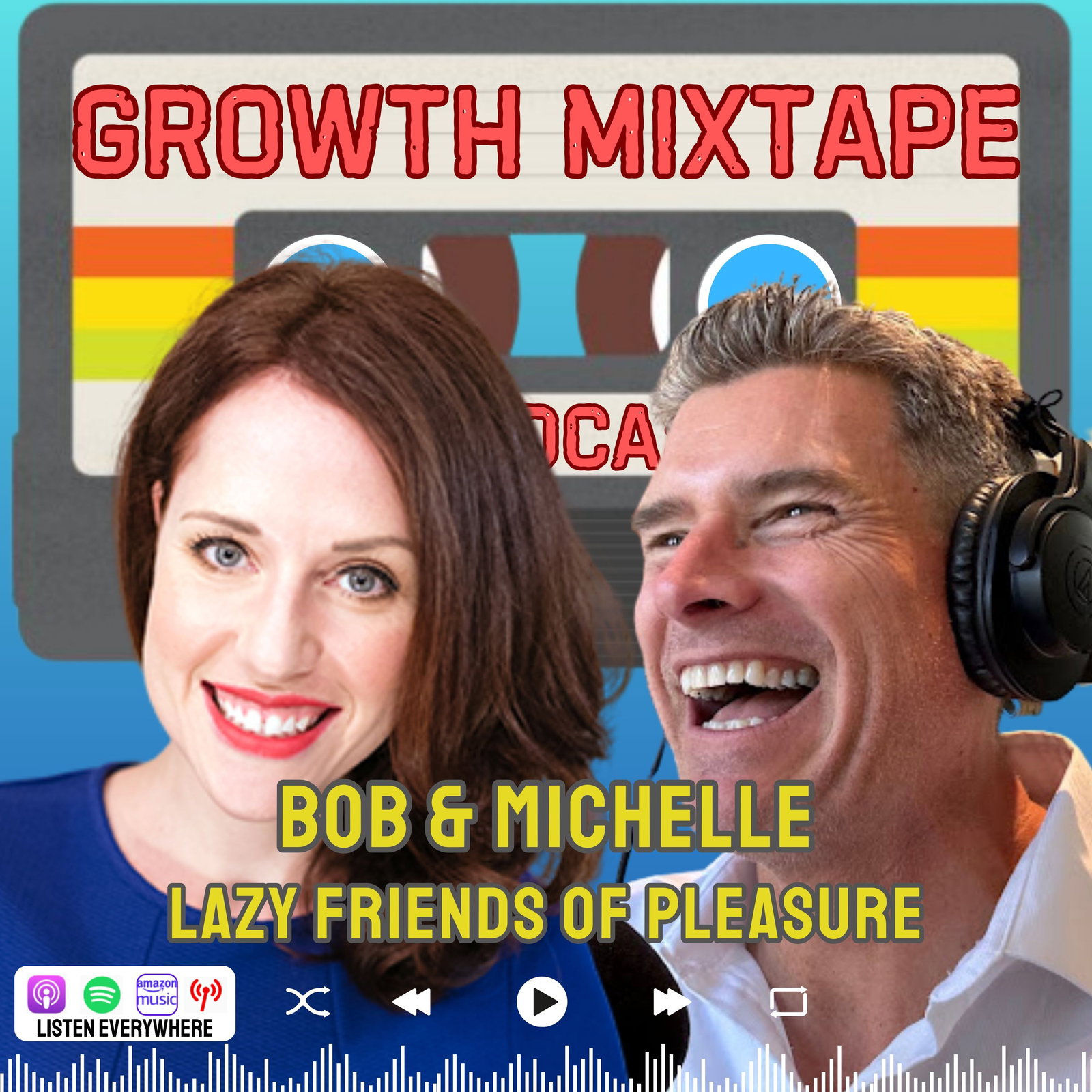
Michelle Grocholsky is back for her second time on the show, and this one's a different format than her first. Instead of a traditional interview, we each brought two topics we were excited to explore, didn't share them ahead of time, and just pressed record to see what happened.
Michelle works in equity, diversity, and inclusion, and she's someone I've had dozens of conversations with over the years — but there's something about doing it with a microphone on and other people listening that makes even close friends nervous. We both admitted to that jitteriness up front, and I think that's part of what made this land where it did.
We got into a belief I no longer hold (that I'm not a creative person), the whiskey-fuelled childhood moment that may have quietly turned my volume down, Aristotle's three kinds of friendship and how our circles change as we age, my nearly-five-years of sobriety and the conversations it forced with myself, and Michelle's decision to walk away from social media almost entirely — and what that clarified about who actually shows up for her.
Please enjoy, Michelle Grocholsky.
Key Takeaways
- The beliefs we hold most firmly about ourselves are often the ones we've never examined. Bob spent his life believing he wasn't creative and needed to borrow ideas from others — only to discover a deep well of untapped creativity once he got sober and had the space to look inward.
- Rick Rubin's reframe cuts through a lifetime of self-limiting stories: never say you're not good at something. All you actually know is whether you've tried it or not. Everything else is a fabrication we've accepted as fact.
- The gap between how the world sees us and the stories we carry about ourselves can be enormous. When Bob talked about "rediscovering" his creativity, friends who'd known him for years were baffled — to them it was never in question. The work isn't building the muscle; it's turning the volume back up on what was always there.
- Aristotle's three kinds of friendship — utility, pleasure, and virtue — are a useful lens for the friendships that shift as we age. We need all three, and the mix changes over time, but the enduring "friends of virtue" (where you can be fully yourself) are the ones worth deliberately cultivating.
- Deep, virtuous friendships often come from unexpected places — Michelle's most precious friend is a man in his seventies she met at a coffee shop, generations apart with little on paper in common. Sometimes you have to be "the weirdo at the coffee shop" and risk a few no's to find real connection.
- Existing pleasure friendships can deepen — but usually only at an inflection point (a diagnosis, a decision, becoming a parent, getting sober). And when you go vulnerable first, sometimes the door stays closed, and that's okay. No single person fulfils every need.
- On sobriety, the hardest conversations were with himself, not others.
- The unexpected gift of sobriety wasn't better sleep (still working on that) — it was comfort in his own skin.
- Michelle's case against social media: it enables "lazy friendships" (people who know your milestones without ever asking about your life), fuels comparison against curated fictions, and quietly steals the hours you'd need to exercise, read, or call your mom.
- The clarifying, uncomfortable truth: when Michelle left social media, most people forgot her birthday and few showed up for her biggest career milestones.
- You can't have it both ways with applause. If you let likes and recognition feed you, you'll be gutted when the applause stops.
- Real connection is a skill people are actively losing.
Connect with Bob Mathers
The Restless Leader Newsletter on Substack: https://bobmathers.substack.com/
Links & Resources
Michelle on LinkedIn https://www.linkedin.com/in/michelle-grocholsky/