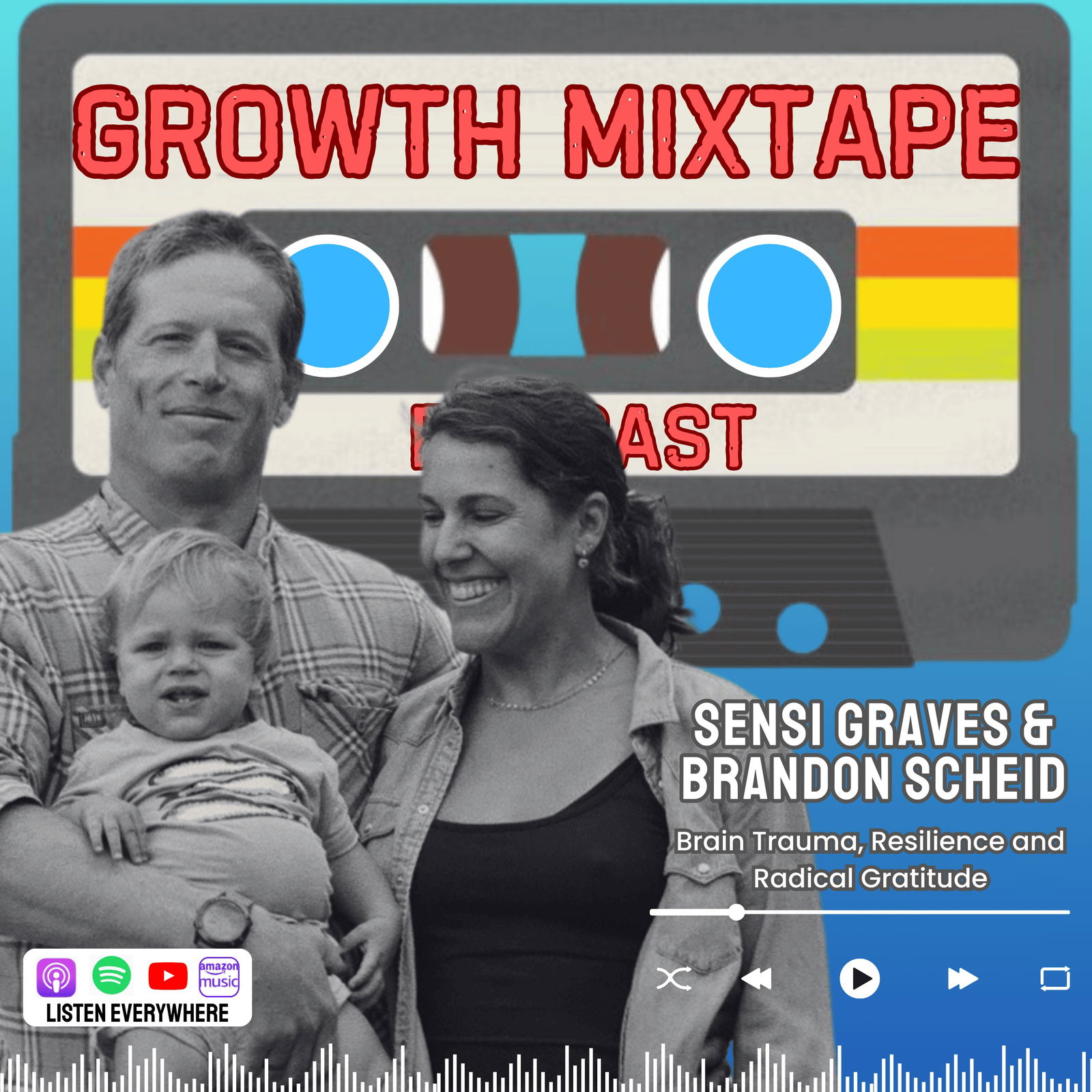
Today, we talk to Sensi Graves and Brandon Scheid - extreme athletes, parents, partners, and now the subjects of a powerful new documentary - Windfall.
Two years ago, Brandon was in a speed flying accident that nearly took his life. In the days immediately following, Sensi learned she was pregnant with their first child. Together, they share their incredible journey of recovery, and how learning to live with Brandon’s traumatic brain injury has re-shaped their view of life and parenting.
This conversation is about more than the accident. It’s about identity, love, and how we move forward when life doesn’t go as planned. It’s about the quiet strength of caregivers, the stubborn resilience of the human spirit, and the role that community plays in helping us heal.
Please enjoy, Sensi Graves and Brandon Scheid.
Key Takeaways
Turning trauma into purpose: Brandon and Sensi share how they’ve made meaning from a life-altering accident—and why they wouldn’t take it back.
Two perspectives, one story: Sensi speaks as the partner and caregiver; Brandon shares what it's like to survive a crash you don’t remember, and come back a different person.
Brain injury recovery isn’t linear: From post-coma mania to long-term depression, Brandon opens up about the invisible impacts of TBI and how he’s still navigating the mental health journey.
Presence over purpose: In the middle of crisis, Sensi redefined success as simply taking care of herself, her baby, and her husband—nothing more.
Letting go of the “old you”: After his accident, Brandon couldn’t return to his old sports or identity, so he explored everything from drones to piano to punching balls while walking down the street.
What we focus on expands: Sensi talks about practicing radical gratitude—not to sugarcoat hardship, but to make space for joy amidst the mess.
We all molt: Brandon offers a surprisingly perfect metaphor about crustaceans—sometimes growth requires outgrowing your old shell, even when it hurts.
Vulnerability creates connection: Their willingness to be open, even in the messiest moments, is a powerful reminder that healing isn’t something we do alone.
Connect with Bob Mathers
Website
LinkedIn
Instagram
The Restless Leader Newsletter on Substack: https://bobmathers.substack.com/
Links & Resources
https://www.instagram.com/windfall_movie/
https://www.instagram.com/sensigraves/
https://www.instagram.com/brandonscheid/
https://www.sensigraves.com/
https://www.linkedin.com/in/sensi-graves/
The Body Keeps the Score by Bessel van der Kolk
Big Magic by Elizabeth Gilbert
The Rise of Superman by Steven Kotler
Speaker 0
They say you can't ever really go back to your life before a brain injury. There's no going back. There's only this, like, new path, this new version of what you're gonna get, and you have to just be really satisfied with that version or you're just gonna be super depressed. That's I'm guilty of that, but, like, you gotta nip that in the bud as quick as possible. The mania was like that didn't exist. I didn't have sadness. I didn't I had to, like, teach myself to cry, so listen to sad music and and candlelight and be like, oh, I can do it. And since he would wake up, and I'd be bawling and the and she's like, what are you doing? I'm like, I'm crying. I got it. It's like it's like crazy stuff that I was doing because I was, like, committed that I was gonna, like, regrabble that spark of life that I had prior to the accident. I wasn't gonna let the accident be a a bad thing. I wasn't gonna let it define the downfall of my life. It was gonna be the catalyst that ignited this, like, bright brilliance of my life. Speaker 1
Alright. Welcome to the Growth Mixtape podcast, and I'm your host, Bob Mathers. Now before we get started, I'd love to ask a quick favor. If you like what we're doing here, please follow the podcast wherever you listen and give us a quick review. There are almost five million podcasts out in the world, which means it's really hard for people to find us. The more followers we have, the more reviews we get, the easier that gets. So please share this episode with anyone you think needs to hear it. And if you want even more of this awesomeness we're serving up, join my one hundred percent free substack at substack dot bob mathers dot com or get the link in the show notes. Now today, we talked to Scentsy Graves and Brandon Sheed, extreme athlete's parents and now the topic of a new documentary Windfall. Now if Scentsy sounds familiar, maybe it's because she was one of my first guests almost two years ago, and that episode remains to this day one of our most popular ever. If you haven't checked it out, go do that. Now this episode is a bit of a master class in resilience, purpose, and what I call radical gratitude. The ability to find that gratitude in the middle of insanely terrible things happening to you. But honestly, you could hear about people persevering through difficult times anywhere. This conversation is more raw, more honest. Brandon and Scentsy's journey is not over. And while their lives on Instagram look exotic as they travel the world chasing their stoke, the reality is a family still recovering, still learning, still adjusting to this new life they didn't plan for. Their strength and resilience is absolutely inspiring, but their honesty makes us all remember that nothing is as easy as it seems. Life is going to throw some terrible shit at you. You might eventually find beauty in it, but that doesn't mean it's easy to find every day. So if you ever tried walking away from another version of yourself either because you wanted to or because you had no choice, this episode is for you. Or maybe you just need a reminder of what humans are capable of. Yes. Brandon and Sensi do things every day on the water and in the air that only superheroes are supposed to be able to do. But they're not superheroes, and anything they can do, you can do too. Please enjoy Sensi Graves and Brandon Chi. Brandon and Scentsy, welcome to the Growth Mixtape podcast. Man, this is gonna be awesome. Speaker 2
Thank you, Bob. We're super excited to be here. Speaker 0
Yeah. Anything we can do to kind of inspire others and get our just get out there, you know, in this age of AI slop genuine human, interactions are are dime a dozen, and so we wanna invest in that. Speaker 1
Well, you are speaking my language. And before we jump in, I just wanted to give a a bit of context. So, Scentsy, I don't know if you realize, we you were on the podcast almost two years ago. You were guest you were on episode number five. You are still one of the top five most downloaded podcasts that I've had in almost sixty episodes. And that was three months after Brandon's accident and just short short number of weeks after you found out you were pregnant. So we didn't talk about Brandon's accident, like, because that was kind of the focus of that conversation was more about your origin story and the work that you do, and we can touch on that today. But and it was every everybody I know, I I probably got fifty texts for people. Oh my god. I'm following Scentsy on Instagram. I'm following Brandon. They've absolutely loved it. But when I saw the trailer for the documentary, Windfall, which I wanna talk about, It was like I messaged you immediately. It was like, yes. This is our chance to continue the conversation. It feels like we left a big chunk out of it. And, man, I just I can't tell you how grateful I am for this. This is gonna be I've got we could we'd have to go away on a weekend to cover all of the things that I wanna talk about. And I feel like you could solve my life if we do if if we do this just right. Speaker 0
She's got a lot of, tips for success, man. Like, she works hard to find to quick cultivate these things. Like, you know, the the whole reason we're in this well, we're in life in general, but the accident was, like, you know, crazy for me. And had it things been reversed and I needed to be the one that was in her position, I don't know that I would have the adequate tool set nor the the the diligence and fortitude to, like, weather the craziness that happened. I was the affected person, so she's got a lot of tools. She could probably fix your life if you let her. Speaker 1
Well, yeah. I mean, I meant both of you combined and the the wisdom that you're about to impart on me. This is I'm so excited about it. Now there's probably a couple of different groups of listeners. Right? There's people that are that are fans of yours that are coming, here, and they might know a bit about the accident. There's probably a lot of my audience that doesn't know as much about it. So I wanted I wanna talk about that, but I just I wanna step maybe just a little back a little bit further to talk about kind of life before the accident. Because I don't know if you've ever done this, but I went to both of your stories on Instagram, and I just went backwards. Just kept going backwards. And, of course, there's amazing beautiful pictures of you and your son, Flint, and cross country skiing and doing water sports. And then you go back into the recovery and coming home and in the hospital. And then you step over this magical threshold where everything is kind of in a different world. And I wonder how you look back on those weeks and days before the accident, before everything changed. Speaker 0
Yeah. That's I do agree. It's kind of crazy because there's a heavy delineation. Right? There's, like, in a crazy way is my departure of professional win sports and, like, this, like, weird animosity around social media and, like, how what it was doing to the sport and the media and the way that, like, things are portrayed. Instagram for me became this spot that I could, like, vent this, like, shred culture that I had in my in my existence, whether that was, like, kiteboarding at the time was really passionate about wing foiling, this, wonderful sport that, was a branch of wind sports. And, I was, like, getting into speed flying a lot. Right? That was, like, five years of build up to the crash. Basically, five I hate to say it that way, but, like, I speed flew for about five years before that happened. And it became a funnel for that a little bit. So there is a strong delineation. There's, like, a lot of what most people would say is, like, risky behavior. In the speed flying community, people would say not that risky behavior because they're tolerant to, really high levels of risk, because of what they get out of that, the offering that much risk on the table. And we can get into that why why it's such a slippery slope. But, I'm kinda proud of all the all the things that I hiked up and all the effort that I invested and how I did all that and how I carried myself through all that. So it it carries a lot of connotation for me in in several different ways emotionally. Yeah. It's it's kind of an interesting moment, obviously. Speaker 1
Well yeah. And, of course, and, Scentsy, you had found out you were pregnant just around the time of the accident too. So it's probably I don't know. It's hard to separate the accident from all those complicated, you know, emotions of being pregnant and then being a because you think about your life in terms of these forks in the road, right, where there's, like, things before the accident, things after the accident, things before being a mom, things being, like, after a mom. And now in this case, it's all just mashed up together. Speaker 2
Yeah. And it is interesting when you do go back as you did. Brandon's social media and his experience at the time was a lot about the shred, as he said, and showing people how much he could do and pushing the limits of his sports, which he's really excited about. And there's a lot of separation between, us as a family and him as a solo person. I think that's what you see a lot in his his particular media is before the accident, it was very focused on what I'm doing and what I can do and pushing the limits as a human. And post accident, obviously, there's more, family with Flint, a new addition, but more in general of us growing as humans together. And I would probably say that that was similar for me prior to the accident. Not to say we were separate, but we're pushing our own agendas forward, and we didn't have to come together as much because we're both autonomous humans that were successful in our own ways and able to support one another fully. And then you have something such as the accident in which it required a big stepping up on my part and a lot of, woah. Okay. We are in this together. Now things just got really heavy Despite being together for over fifteen years and going through ups and downs of life that naturally occur, this one particular piece really was a exclamation point on, okay. Now this is something that he really needs support. We're a family. It's kinda like, okay. Fuck up the bootstraps. We gotta do this together. Speaker 1
Yeah. Well, there's there's a couple of things that I wanna come back to on what, things both of you said. But I imagine listeners might be wondering, okay. What's this crash you're talking about? So can you walk us through sort of what happened? Speaker 2
I'll start. And it is, of course, very emotional. Anytime you get a phone call, that is, alarming. There's a lot of constriction that happens in the body. And not to go too deep in the psychology of things, but I don't know if you've read the body keeps the score, Bob, But your body remembers trauma. And even just talking about I feel myself getting that constriction and the shortness of breath and the trauma, so bear with me if if it gets emotional here. I was in Canada. So it was right after Thanksgiving. We were together as a family on Thanksgiving. I flew out the next day, Friday, to Canada for a work trip. Arrived is the first day on location. I was there for a speaking event and was thankfully with a a group of really supportive women and was actually getting my headshots taken. And so I was in a small room with a photographer and one other person and sitting on a chair and posing for the camera, And I, had my phone to the side. I walked off the stool to my phone, picked it up, and I had, like, six or seven missed calls from my friend, Ewan. And Ewan I mean, I don't know how often he calls me. Very rarely. And so I immediately got that constriction in my stomach and the feeling I was like, I knew something was wrong. I knew something was really wrong. And so I called him right back, and he said Brandon's been in an accident. And I, just collapsed to the floor, and just stress and, fight or flight took over and just couldn't even really function because he had said that we're not sure if he's gonna make it. And, of course, at that point, I knew it was a speed flying accident. He walked through, a little bit of the high level details of what happened, but I immediately kind of handed off the phone to the other woman that was in the room because I was just too overwhelmed with emotion and sadness and trauma response. So over the next six or so hours, I kept getting information about what had happened. They had loaded Brandon onto, Life Flight and taken him to the hospital in Portland. We kept I kept getting snippets of information. Sitting with these women, there was one that was a psychologist or someone that specialized in athlete psychology, and so she was sitting with me the entire time. We rebooked my flight home. I immediately left for the airport, got home didn't didn't go home. Excuse me. Got into Portland, went straight to the hospital, and found Brandon in a coma in the ICU. Speaker 1
Did you know you were pregnant yet? Speaker 2
No. No. Okay. That comes couple weeks later, but it there is something interesting there, which is I called one of my best friends, on the way to the airport. You know, I'm just dealing with trauma response in the body and just completely overwhelmed. And the first thing that my best friend said to me was, you're not pregnant, are you? And I was like, no. A hundred percent not. There's no way. And that just kinda brushed over, but two weeks later, I found out I was pregnant. Speaker 1
Why would she ask you that? Speaker 2
I don't know. That's the thing. I don't know. I don't know. But Flint was very much meant to be here with us now, and there'll be a little more Speaker 2
I mean, thankfully, I didn't know I was pregnant at that time because I don't think I coulda handle it, Bob. I mean, I barely know that. Barely could handle the the knowledge of the accident. Speaker 1
Yeah. Oh, well, okay. So there's a couple of things I definitely wanna come back to about that. But, yeah, speed flying. So by the way, Brandon, I I had never heard of speed flying or speed kiting. And I saw some of you I went back and watched it on Instagram. I'm like, holy shit. Like, I can't humans do this? Like, it see you you realize that you were like an x men. Like, both of you. Like, you're, like, superheroes. You're flying through the air, jumping in the air. Yeah. It's insane. Speaker 0
It's even thinking about it now knowing that I won't dabble in this sport because of the way that it that what, like, just my personality, I shouldn't be in high risk sports in general. It's so freaking sweet. You hike up a big hill. So it's a subset of paragliding. You know, men have been obsessed with the sky ever since they probably could look at birds or whatever. Right? You have the invention of the plane. You kinda have, like, powered flight. You have all that stuff. Parachutes are needed. At some point, people start taking, like, hang gliders, I think was the first kind of, like, sky sport shred that's in air sports. You know, obviously, glider planes and stuff like that, but human powered. I would say hang gliders, you think of the rigid things in the seventies that fold in half and people fall out of the sky, all this crazy stuff. That progresses into soft canopies. Right? You don't wanna, like, build out your you don't wanna spend an hour building out your hang glider on on land landing or whatever. So then became these, like, fabric wings. They look like a parachute, kind of. The biggest difference between a parachute and a and a paraglider is a parachute is a drag device. It's it's designed to slow you down, where a paraglider is actually a wing. So given the proper conditions which is basically forward speed, just like a plane, if you go fast enough on a plane, forward speed, you get lift out of the wing. Same thing with the paraglider. If you can go forward fast enough, it'll lift you. Well, gravity provides the initial force of the forward, so you just run it off a hill and gravity pulling you down moves you forward and then you fly. You can tap into thermals like birds. You can find, like, rising columns of air and fly for hours and hundreds and hundreds of miles, in cross country paragliding. There is acrobatic paragliding, which is like you go up and do, like, crazy tricks with your paraglider, kinda like spin them and they flip over eat them now. They do crazy stuff in that. That also really dangerous. And then recently, there's been a sub sport of paragliding called speed flying, which is, you're basically using just the gravitational force. You're not looking for lift at all. You're actually looking to go down the hill much like a like a mountain biker or a skier. As a kite boarder, I've been flying basically wings for twenty five years. Like, the paraglider was not something hard for me to learn how to fly. But the hard thing was to learn when to fly, when to put it in the backpack, when to check the brakes. Like, I remember when I learned, I went to a pretty loose speed flying school. The kid that was, like, sweeping up there, he had just broken his back and his and all the like, he was in pieces and, like, I remember saying the word woe on a landing because I was coming in really like, what to me, what seemed really fast, they were like, okay. You don't get to touch the speed wing anymore. You only get to fly the paraglider. So they were doing their best. This place is called Saboba. It's in Southern California, to help all the skydivers who are like, woah. This sport looks freaking sweet. And they're just piling themselves in because they have canopy experience but they don't understand flight mountain weather. If the light says green as a skydiver, you jump out of the plane. There's no green light when you hike to the top of a five thousand foot mountain and you go like, oh, I'd really like to not hike down. It's up to your own person whether that that you can make that call. And some people are a little loose with that. And, the canopies were were they're learning how to make them. So this school in particular will teach you how to speed fly, which some would say is irresponsible. But they're trying to, like, mitigate basically people from doing it on their own and not having the proper skills. But yeah. So it's a scary, gnarly, super addictive, super, amazing sport that gives you a lot. You spend time in the mountains. You get up early. Camaraderie with your friends. If you know anything about flow state, the brain, state you are into, it tampers down your prefrontal cortex. It makes you feel at one with nature. It disassociates yourself. You have deep sometimes epiphanies in these moments. It's this amazing brain state that you can get into. And that's kinda where action sports lives. It's why the people do the wing suiting. It's why this big wave surfers do the big waves. It is about the the sport feat itself. But there's something else going on in your brain, and that state is so addictive. It's it's no different than hard drugs. Like, you're willing to put everything. I'm willing to risk my basically, risk my life for a three minute flight down this big hill for for kicks or, like you know? It's a weird one. So got addicted to that, and, I don't remember the incident. I can only talk to you about it because it was, witnessed by somebody who actually filmed it. So that's, gonna that's part of the documentary. We have actual all the footage. He saved my life. I he's a good friend of mine. His name is Isaac. He's a professional kayaker, and pilot and and just, like, really awesome human. And he was there. He he administered, you know, the the things that were needed to to keep me in stable condition. And I was, life flighted, as Scentsy said, to the Portland Hospital. Thank God for Isaac has the capacity to deal with trauma like that. Like, I don't have any memory of this incident. I don't remember Thanksgiving. I have, like, a big black hole, until I wake up in the hospital in a coma. It's on I I the hospital is a weird one for me still. I don't know what memories are mine and what are, like, fabrications of mine. I was broken, but I wasn't, like, that deterred because I had a crazy brain injury to the right side of my brain and my temporal and frontal lobes. And, that basically made me not be able to access that much emotion, kind of just logic. And so I logiced my way out of all of the problems, and I was like, a really brain injuries are crazy. We can go down that wormhole. But, yeah, I was in a bad speed flying accident, basically. Speaker 1
So you hit the ground at what? Sixty miles an hour? Speaker 0
So hard. I was going, like, I would say forty to fifty miles an hour, and then I narrowly avoided a I was gonna hit the ground, but then I made some evasive piloting maneuvers, which put me not hitting the ground, but then falling off, like, a hundred foot cliff. So I guess as fast as you would fall off a hundred foot cliff with kind of, like, a parachute, it's kind it was kind of a parachute. It was ripped in half because it hit the cliff, and then it got destroyed. So, like, yeah. Like, pretty hard, I think. I bow I apparently, I bounced a few times. That broke my fall a little bit. Come on. I I know I've been falling my whole life. I stomped the fall. I mean, obviously, I crushed Speaker 1
it. There must have been some muscle memory in there from I mean, you don't remember it, and you're watching your body do these things that probably save your life, but you don't know you didn't consciously do it or you don't remember doing it. Speaker 0
Yeah. Yeah. Lots of lots of crashing. I had a lot of lot of time crashing in my life, and I learned how to deal with all that, I guess. Speaker 1
I wanna come back to the documentary, but just for now, like, what was it like watching that footage? Speaker 2
I haven't seen it yet. Really? No. And, you know, going back into the trauma in the body, I'm nervous about watching it. Yeah. Speaker 2
You know, now we're two years out from the accident, and, obviously, we've gone through a ton of healing, an immense amount of healing. But I think watching that is just gonna be so overwhelming that I'm really hesitant to dive into it. Actually, I think we're getting a cut of the documentary next week, And so the time is is coming up for us to view it, but I'm pretty nervous about it. Speaker 1
Yeah. I'd like to talk just a little bit about the brain injuries. And I wonder, Sensi, maybe if if you could talk a little bit about that first because it seems like, you know, it's a it's an invisible injury. So when something like this happens, you have this amazing community rush to your side, and you've got everybody around you. And then Brandon recovers pretty quickly and it you know, to like, somebody walking down the street, he would say, oh, yeah. Guy was banged up, but three months later, he's out there doing cool shit again, and he looks normal. And so people start treating you normal, and yet nothing is normal, I'm guessing. Speaker 2
No. That it was extremely tough, the brain injury. I mean, initially, his he broke his back. He had, abrasions all on the right side of his body. He had a broken eye socket and face, broken pelvis. What else did you break? I'm trying to think of all his physical injuries. They were initially going to have to remove his eye, but luckily, they saved his eye. So a lot of stuff physically, and we, of course, didn't know the brain part of it. Besides that, there was bleeding in the brain, which, thankfully, they were able to stop very soon because he had an injury to the back of his brain, which is the pons, which has actually what is it? A seventy percent mortality rate? Speaker 0
It's really high. Yeah. The ponsidine is in your brain stem, and if your brain stem stops working, you stop being able to breathe, respirate, all that stuff. So they keep you alive on a machine. But, generally, when those situations happen, they talk to the family, and and a quality of life assessment is is usually made. And, usually, that ends with the the termination of the of the person because without a brain stem, you're kinda basically worthless. Speaker 2
So, thankfully, that bleeding stopped relatively quickly, and they were able to stabilize that. But we didn't know the extent or that he had a brain injury until I woke up, and so he was, in a medically induced coma for a couple days. And they were going to operate on him, and, thankfully, all this stuff lined up where they didn't end up having to operate on him. And so he actually didn't have any surgeries besides the all the stitches that he had in his body. But when he woke up, he was on a lot of drugs, and so that was still very fuzzy for him. And we didn't know the extent of anything until a few days after that, so I would probably say, ten days after the accident when I was like, oh, this isn't him. Speaker 0
When I was yelling at the doctors to take me off the pain medications? Speaker 2
How his brain injury manifested, which because it was occurred on the right side of his brain, was mania. And so I don't know if you have any experience with mania, but that meant that he had he couldn't stop talking, more so than no. He was overly energetic. He had no compassion. It was all very external, very critical, very externally critical, and that meant that a lot of it fell on me. And when you talk about community initially I mean, even, you know, throughout the past year two years, we've had a ton of community support. But after that huge surge in the beginning of community support support getting back home and settled in and kind of getting back on our feet a little bit, I was the primary caregiver, and, therefore, the bulk of Brandon's criticism and aggression landed on me. And it was a very challenging time, obviously, for me being newly pregnant, but also because it was a balance of having compassion for this person that, he was obviously had a brain injury. And even though you can't see it, he's you could tell I could tell immensely how much he's experiencing, but then having boundaries around, Jesus, I cannot be spoken to like that. Like, there's a a point in which it would it it was extremely challenging because he's so manic, so much energy, so much talking. And I'm just like, fuck. Gee. I I just need a break. Like Yeah. You can't keep talking to me like that. So, yeah, it initially, manifested as mania and then six months later, actually, depression. And so we're still not through the woods, but the as you mentioned, the interesting thing with brain injuries is that you can't tell. And so, we've had to employ a lot of grace and compassion throughout this entire process and and asking other people for that big thing. Speaker 1
And what's that like for you, Brandon, when you look back? Like, you can remember behaving that way, but I imagine it's also kind of hard to hear. Speaker 0
Yeah. I think that's the nerve. I'm not too worried about watching me my carcass bounce down the hill. I'm more worried about the fallout because we started the filming process, like, a couple weeks after I got home from the hospital. And so the I don't know. I I I was a I don't hate to call myself a crazy person because that's a negative connotation. I had a brain injury. I was an injured brain person, but I exhibited like a like a freaking crazy person. So, like, they they pointed a camera at me and said, talk as much as you want. And mania Brandon is like, yes. It's what I always wanted. And so I'm a bit, to to see what comes out of the all the all that. So that's more where I'm nervous. For me, the so to to hear the disruption, and know that it's it's not a I'm not proud of the way that that manifested itself. I'm not happy that it's gonna be portrayed that I'm probably a huge dick, following my brain injury, because I was, and that's fair. It's interesting to be like, oh, is that what I'm really like when my inhibitions are turned off? Like, it it kinda makes you feel a little introspective and a bit, you know, like, you gotta really look at the the darkness in there or I hate to say darkness, but, you know, the dark side of that. But it was so fun for me. I was loving it. I mean, it's insane. It's like doing all the best drugs in the world all day every day, and you don't care how you affect other people, and you're just, like, on this freaking hoo ah. It's it was, like, really awesome for me. I it was look. I don't know if it's how the universe works out or how brain injuries work out, but, like, it was so helpful in my recovery. It was like, I'm gonna do all the workouts. I'm gonna do all the self growth. I'm gonna do all the stuff. Like, I was so driven, like, to to achieve they say you can't ever really go back to your life before a brain injury. There's no going back. There's only this, like, new path, this new version of what you're gonna get, and you have to just be really satisfied with that version or you're just gonna be super depressed. That's I'm guilty of that, but, like, you gotta nip that in the butt as quick as possible. The mania was, like, that didn't exist. I didn't have sadness. I didn't I had to, like, teach myself to cry. So listen to sad music and and candlelight and be like, oh, I can do it. And since he would wake up and I'd be bawling and the and she's like, what are you doing? I'm like, I'm crying. I got it. It's like, it's like crazy stuff that I was doing because I was, like, committed that I was gonna, like, regrab that spark of life that I had prior to the accident. I wasn't gonna let the accident be a a bad thing. I wasn't gonna let it define the downfall of my life. It was gonna be the catalyst that ignited this, like, bright brilliance of my life. So, hopefully, some of that comes out of it too where it's inspirational and not just like the rantings of a crazy person.
Speaker 1
Hey. It's Bob. And I'm taking the growth mixtape on the road in a series of live podcast episodes. Imagine a podcast tailored specifically for your company recorded in front of a live audience that would be released as its own episode. These are thoughtful, emotional conversations that help teams who have lost their spark rediscover their curiosity and creativity so they can love work again. Sure. You could do a typical keynote or panel discussion, or you could give your team something they'll never forget. Book me at your next event at bob mathers dot c a. Now back to the show. Well, the brain is amazing, isn't it? It's like, it doesn't do anything for no reason. Like, there's a reason behind me. And if it's if the brain the brain is like, well, you shouldn't have survived this. But you'd if there's any chance of you getting through this, you're gonna have to work out like crazy. Like, there's a there's gotta be a rationale behind all this even if it's a nightmare for the people around you. It's like, no. Sorry. You can't cry. Right now, you've gotta work out eight hours a day and keep talking. There must be a reason why it's designed that way.
Speaker 0
Yeah. I feel I feel like like, if you gave me a time machine, said Brandon, go back in time and tell yourself not to speed fly that day, I would never do that. I think it's been a super powerful thing that happened to me. It needed to happen to me, like, to get me out of the the weird, drug addiction to speed flying that I had. It gave us our son. Like, there's so many things that came out of this. So, like, I would never not have it happen. It's critical to to my even even now I'm dealing with the still dealing with so many so much fallout. But, like, I'd rather deal with the fallout and, like, learn and grow and, like, have something come of this rather than just kinda, like, give up, if that makes sense.
Speaker 1
Yeah. And, Cincy, do you look back on it with the same sort of gratitude that Brandon does? Because like you said, a lot of it landed on you. And, you know, from our first conversation, obviously, the work that you do around empowering people and building confidence and setting boundaries, it's like, god. It's like you were perfectly engineered to deal with this if anyone could.
Speaker 2
Thank you. It's it's a tough one because I agree that we've had so much growth out of it. And as we talk about we spoke about in the beginning of this conversation before the accident and after the accident, it was more singular versus us as a family. And so it's simply that shift where it's like we're in this together. We can do this together is extremely powerful. And as I had mentioned on our first time together, Bob, it's that hard the more you experience hardship, the more that you have a capacity for love. I really do believe in that. And so everything that you experience that's difficult and hard increases your capacity as a human for more hardship, more challenge, more growth. And the human brain is actually something called antifragile, which means that we we need hard experiences in order to continue to expand, and the brain thrives on overcoming challenges. If you don't have something in front of you that allows you to grow, we make up challenges. We make up problems, and that's often how we self sabotage because we're looking for things to overcome. And so it's good for us to have hardship. And I don't wanna say that I'm
Speaker 0
Come on. Say it. You're happy. Alright.
Speaker 1
Come on. Say it.
Speaker 2
I wasn't happy that happened, but I'm grateful in the tools that I have and had and have to continue to be resilient.
Speaker 1
Well, I remember you you in our first conversation, and I wrote it down, you cited a quote from the prophet. The deeper that sorrow carves into your being, the more joy you can contain. You got emotional when you were talking about that the first time, and I love that. I've never forgotten that. But I also wonder, like, how do you how do you hang on to that in the moment? Like, when this is going on, you must be, like, for fuck's sakes, like, enough already. Like, haven't I yeah. Okay. Like, it's okay to look back. It's easier to look back in retrospect and say that. But in the moment, how do you find some sort of gratitude or trust that this is happening for a good reason?
Speaker 2
That's an extremely great question.
Speaker 0
I got it. I got it.
Speaker 2
Oh, okay. Right now is the answer.
Speaker 0
Go ahead. When you're in those hard things where it's like, holy moly. How am I gonna deal with this? It's kind of the same as if you were staring at the bottom of Mount Everest, and you're like, I'm gonna go to the top, but holy moly. Like, how there's no way I can deal with this. Like, the avalanches, the crevasses. I gotta base camp. I gotta, like, deal with the giant refuse piles. I gotta do that one like, Everest is, like, a daunting thing. But the easiest way to kind of get rid of that is just to look at what you can do right now and or just in one day. What's the one thing that you can do that gets you one step closer to Everest? Because if you just put your head down and don't focus on the huge overwhelming problem yeah. It's not going anywhere. Everest is still looming over you. But if you just kinda don't look at it in that same light, you look how beautiful it is, you look how blue the glaciers are, take a few steps, sit down, have a sandwich, You're gonna get to the top. Like, is everyone is so hung up on I need now. Now now now now now. I want my solution now. I don't wanna do the work. I want it now. I want my Amazon Prime now. And so you get attached to these results happening really fast, and you forget that, like, one step a day, like, gets you really far in in a year. You know? Like, they they quote the Egyptians built the pyramids, how they do it one rock at a time. It's like, yeah. Okay. Literally, you just show up and put a rock in, and then someone else shows up and puts a rock in, and you get to amazing things with small digestible things that let you not look at the large problem. And during that time, when you're taking those small steps, you you like I said, you look around. You say, wow. It's so beautiful here. I'm so grateful that I took a break to stay here. Or you have a moment where you run into another person. You're like, how was the journey up there? And, like, well, it's crazy. You don't wanna go up there today. And you're like, great. I'm gonna hang out right down here. And so you just find a way to to, like, get some distance between you and the and the big picture by looking down and focus in focusing in, like, narrowing in. And that really is a helpful thing when you're dealing with a lot of crazy adversity, in my opinion.
Speaker 2
I'll add to that because Brandon said something that I also really believe to be true, which is the presence piece. The more we are present in our bodies and can create safety in our bodies with right where we're at, the less everything feels overwhelming and too big to handle. And so during that time, one of the things that I really focused on, and and I maybe had said this in our first conversation together, but my breath best friend at the time had said to me, Sensei, your only job because I was running my swimwear business at that time and, like, coming back from the hospital and trying to be like, what do we do? And then find out I was pregnant. I was just like, oh my gosh. But she's like, your only job is to take care of you and this baby and your husband during this talk. That's your only job. And so coming back into how do I just take care of me, myself, and my husband? And in that order, me, my my myself, my baby, my husband, was was being in the present moment. And, thankfully, I've done a lot of work on knowing what I need as a human, introspection and and revelations around what supports me. And so carving time for that self care, for lack of a better word, but going back to basics. Did I drink water today? Did I can I get outside for a walk? What can I focus on in just the present moment here and now that I can both be grateful for, whether that's looking up at the glacier and saying, oh my gosh, how blue and beautiful it is, or, trying to regulate my nervous system to say, I'm okay? And right now, I'm okay. Because a lot of times when we stop, when we look in just this moment, we are okay.
Speaker 1
Yeah. And I think I mean, one of the silver linings, if you wanna call it that, when we have tragedy strike like this is that life gets really simple really fast. And all of that other shit that you worried about and maybe it, you know, this would happen if you went back through that Instagram story and you're like, yeah, I wonder what that guy or that, you know, wonder what she was worried about that day. It's like, right? Self, husband, baby. That's it. Nothing else. And yet, I often think about this this idea of, like, radical gratitude too because it's easy to be grateful for, hey. I'm, you know, I'm healthy and my baby's healthy and my husband is recovering, or my wife is amazing. But it's like finding gratitude in those really impossible things that you would never wish on anybody. It seems like that is a big thing as well, which kinda kinda kinda goes to the core of what you were talking about.
Speaker 2
Yeah. Definitely. And I will say, you know, Bobby, you're like, oh, didn't you feel, like, at a certain point, like, this is enough? Like, why am I getting served up with another hardship? Because I have had a lot of trauma happen in my life. My mom died when I was sixteen years old. My dad's been incarcerated twice in federal prison. My younger brother was shot. I've had a lot of trauma, but we all have. And in that initial reaction after Brandon's accident, besides the overwhelming grief and sadness that had come up and the not knowing what's gonna happen, there was a bit of why. Why is this happening to me? What's the lesson here? Why do I need another, hardship? I I feel like I've gone through my fair share of traumas and hardship. I don't understand why I'm getting served up another one. And I was stuck in that for a little bit.
Speaker 0
Is that your violin that you're plumber? The world's tiniest violin?
Speaker 2
I was stuck in, why did this happen to me? And, thankfully, I worked through that pretty quickly, but I think that's a key to it as well is allowing yourself to be in the grief and to be in the sadness of it and I'm letting yourself feel that way. That's okay. That's okay. Because we can't always move into gratitude extraordinarily quickly, but it is focusing on those small steps of self care. The only things that matter are the here and now, and what can I focus on, making the world really small, feeding ourselves? The community came through huge in that aspect, dropping off meals to us. And then slowly slowly, it's this is what I can continue to to focus on, which is we have a roof over our heads. We're making progress. The baby's kicking. All these things that, is a choice. I will say it's a choice. You get to choose what you focus on. What you focus on expands. And so training myself to look for the things that are beautiful and joyful in life, even if it is hard, it's okay.
Speaker 1
Well, then I wanted to ask you about, maybe I'll ask you this first, Scentsy, and then Brandon, I'd love to get your take on this. This idea of because when the first conversation, Scentsy, we talked about your why and helping people, helping empower people and and find and express their amazing humanness. You did a better job of it than I just did. But I wonder if that's changed, whether it's changed from being a mom or whether it's changed from the injury. How you think about that? Because and I'll tell you why I asked because I think a lot of people get crippled with this purpose anxiety. Like, oh my god. I don't know what my purpose is. And I think it's okay for it to change. And if it's you don't have to know your life's purpose, certainly when you're twenty or twenty five or thirty or if in my in my case, fifty five, it's okay. Just find something that's meaningful and move in that direction, and it might change.
Speaker 2
Yeah. I love that you point that out because I think we get stuck in that a lot as humans that we're like, find your passion, follow your passion. And I remember for a really long time, I was like, I don't know where my passion is. What do you mean? Like, I want I wrote in my journal, I just wanna be passionate. Like, that was something that I wanted to focus on. I was like, I wanna be passionate about my work. That was a value of mine. And I felt almost crippled with inaction because I was like, I don't know where the heck my passion is. So I agree that that's not something that we should be teaching people at all because I think you could actually go through life and not find anything that is, quote, your passion. But what I think is more important is that you just allow yourself to try things, and I think that's where we get stuck a lot in I'm gonna continue with this job because it's what I know. It's safe. I've done it for twenty years. I'm gonna keep doing that even though I don't feel passionate about it or even though I don't love it. And that's where we need to release and say, it's okay to not know and give yourself permission to try something. And, actually, in the book Big Magic by Elizabeth Gilbert, she tells a story about uncovering what she wanted to do next. After she wrote eat, pray, love, the mega hit, where she had best selling book and movies, like, you can't get really, you can't really top that. She was crippled with, what do I do next? How can I find my next thing I'm passionate about? How do you follow-up a mega bestseller? And she tells a story about starting to garden and something that she was just a tiny bit interested in, and so she just started gardening in her yard. And then she discovered a flower that she was excited about, and then she started looking into the history of that flower. And she learned about how the flower came over, on a boat and was imported from England way back in the day. And she uncovered this whole story around this flower, and long story short, that became the epicenter of her next book. And she talks about pulling on the thread of possibility where we allow ourselves to follow the inkling of anything that we're interested in or excited about to uncover what's next for us. And I think that's how I've been able to finally do the work that I am passionate about, which is I've tried a ton of stuff, And I've done a lot of introspection and personal development work around revealing what lights me up, and I'm thankful to align with what, the Japanese called your ikigai, which is the juxtaposition, the intersection of what you love to do, what you can get paid for, what the world needs, and what you're good at intersect. And so all that to say, I think you just need to allow yourself to try things.
Speaker 1
Yeah. Well, I love that so much, Sensei. I love that big magic book. I just read it, like, in the last couple of months. And so, Brandon, I'm wondering from your perspective, like, it and it reminds me of this idea of curiosity. Like, it does feel like this idea of curiosity and giving us the freedom, like you said, Cindy, to try new things. I wonder how that showed up for you, Brandon, because all of these things that you used to love doing and chasing, you know, being addicted to flow, what do you do when you can't throw yourself off mountains anymore? How do you chase that?
Speaker 0
Oh, man. Complicated one, because as as a as that does something for my brain, that I crave. Right? So you need to find and engineer new and exciting ways for you to get to that same location, I guess, in your brain chemistry. There I read a couple books. The one that really stood out to me was called The Rise of Superman. It's it's in particular about why action sports, are pushing the the progress of human possibilities. Like like you said, X Men, you're, like, flying down this mountain. So there's something about risk that, amplifies that that that state that gets you to where you can believe that you can do impossible things. And so just like any good old drug addict, I was, like, craving that, like, crazy. So after reading the book, I was inspired that his whole thing is, like, hey. That's great that action sports risk their lives, but, like, what can you as a normal person learn from this? How can you apply this? And you talk a lot about how, people in business are really trying to get their engineers and their workers to access this brain state because this is where the the magic happens, the moments. And so there is benefits to engineering it in other ways. And, historically, we didn't have to, like, jump out of a plane to get there. There was there was ways that we got there. It's was through communication. So deep conversation. You ever be in a conversation with someone that's so engrossing that you you're like, where did the four hours go? Like, wait. What? You lose track of time. You like, that that's flow state. That gets you there. Music, man, music for sure can get you there. You're lost in a riff, especially if you're playing with other people. That that communication, the symbiosis that happens in music. So for me, immediately, I was drawn to the piano. I've I love playing the piano. I had to have a hobby kind of before the accident. I play dabble here and there. We have one in our house. Now I try to play the piano almost every day. It's so wonderful for your brain and your and your, dexterity and, like, all the things you need. You can do it quietly. You can put on headphones. You don't bother anybody. The one that was, like, the easy one for me too was I got into, FPV drones. So I don't know if you're familiar with what this is. It's it's like, it's a drone, which is like a flying helicopter. They go really fast or they can depending on what you buy. And then they wirelessly transmission to a headset. So you put on, like, what looks like a VR goggle headset, and, you instantly become a bird because you you then are wherever that drone is. And guess what? If you crash the drone, it just costs money. It doesn't cost your body physically. It still sucks when you crash your drone. They're, like, expensive. So there's still risk. So fun. And, for me, I had a lot of visuospatial disruption. It's sense he, commented about how I they almost lost my eye. I had a lot of impact to my to my vision and and the optical center related to that. I had a lot of, issues with my visuospatial balance. I had insane amounts of nausea to the point of, like, vomiting quite regularly. So I needed with my goal to be I'm gonna be on a hydrofoil, which is a lot of visuospatial information, balance. My balance was immediately, compromised. Like, in the hospital, they were like, balance. And I laughed at them because I had mania. I was like, I'll show you how to balance. I could balance with my eyes open kind of with a broken back and all that stuff. They would they would really wouldn't wanna let me do it, but I'd do it anyways. And then they'd be like, close your eyes. And I close my eyes. I fall over instantly. Or put your feet in a straight line and balance. Fall over instantly. I'm like, uh-oh. Time to get to work. So how do we how do we get ourselves through that in a safe way that also gets flow state? I got on a simulator, so I was able to sit. I would sit on a medicine ball, and then I'd be, like, steering the drum. I'd be like, oh, and I'd, like, have to, like, like, kinda, like, stabilize myself and my spine and all that stuff. We went to California. Remember, I was obsessed. I made your cousin drive me around to spots just to fly my drone.
Speaker 2
Forgot about the drone. It was like Well, this is one thing we need.
Speaker 0
Tons of money on drones.
Speaker 2
On the side, Bob, Brandon and speaking of the curiosity, he was so into different things after the brand new Bone
Speaker 2
He bought he was going to the archery.
Speaker 0
I bought a five hundred dollar compound bow.
Speaker 2
He was biased. I'm like, oh my goodness.
Speaker 0
I had to give her my get too many control of my money because I was like, I I don't believe in money. I just buy anything. The Internet is so easy. Just click a button, and it shows up. You're like, yeah. I'm buying that. I'm buying that. I'm buying that.
Speaker 2
He bought so many drones. I was like but, you know, I was like, okay. This is good, and it gives him something to do because he has so much energy and curiosity and just, like, wanting to do stuff. I was like, we have to do something. Yeah. So is there anything else you got? The bone arrow and the drum, the camera?
Speaker 0
The piano. I was, into breath work. I was, like, holding my doing holding breath holdings.
Speaker 2
You walked out on the street punching this ball. Oh, I had the I had
Speaker 0
a head ball that you punch. It's like a it's like a workout thing, but it really helps with, like, the perception in and out of space and my balance. So I'd walk to my hyperbaric chamber punching my ball. I'd go in my hyperbaric chamber. I'd hold my breath for five minutes, and then I'd go home and I'd go on a cold plunge for, like, ten minutes. I I could do anything I put my mind to. And that's why kiteboarding is so rad because I was able to go from, like, you ride with a twin tip, you ride with a surfboard, you ride with a foil, you jump really high in the air. It never gets stale. It's, like, always can bring something each time. And the long the long goal site, which didn't take that long, was, like, I'm getting back on the hydrofoil because that you can't really jump super high. You're not going super fast. I see, like, seventy year old people do it every day here in the gorge, so I know it's approachable. It's It's a sound bite. But, like, hydrofoiling basically, like, saved my life because, like, if I didn't have the access to that and I didn't have that as a motivator to get me, I don't know if I'd still be a dizzy goo crying my eyes out because of, like, how much I had to put in to, like, get that goal. Helped me recover, like, massively considering the the what normally happens with brain injuries, basically. Yeah.
Speaker 1
Well and that's a couple of things about that, and it's actually a good segue into the documentary. I didn't realize that you hadn't seen it. Who did you make the documentary for, and what do you hope people take away from it?
Speaker 0
Yeah. So I think the goal is broad. I would love that almost anyone could watch it. I'm not sure. It's it's sport. It's injury. It's it's growth. It's kind of a little niche, but the goal is to take anybody who's given a life changing circumstance. In our case, it was an accident, so a lot of trauma. For some people, it's having a baby. That's a pretty big life change. And a lot of people are gonna do that. So we did that one, at the same time. It's a real story about a relationship, you know, working on your relationship through through diversity. And so I'm hoping that there's some something a lot of people can glean from it. I'd hate to say if you're broken and put out, watch this and you're gonna be, like, stoked. I don't wanna say it's for broken people, but, the goal would be just to inspire people because this is gonna maybe sound crazy, but, when I had mania, I was I felt that, like, this thing was coming through me. I felt like I needed to inspire people, that I needed to take advantage of this, that I, like, I have journal after journal after post after post of all this thing that I wanna do, all these inspirations. Like, we need to bottle this up and, like, get this. And it made me really think, like, you know, those historical figures that you think of that inspired generations of people. Like, who's to say they didn't get hit in the head with a rock or fall down or have some malnutrition? You can get in trauma in a lot of different ways. And so I was convinced that, like, this this thing was, like, coming out, and I wanted to, like, encapsulate that in the best way possible. And at the time, I just wanted to talk, and and I know movies, and I kinda worked in action sports. I was like, man, feel like there's something here. So the target would be to inspire other people that through growth, through trauma, and through change that you can lead a a wonderful existence and and how to take those those lessons that I learned the hard way and hopefully apply them to your life without having to learn them the absolute hard way. Like, a gentle nudge rather than what I got, which is like a big bat to the head or something, you know, basically. Right. Like, you think of a lobster or crustacean. K? This is a little abstract of off topic, but it's a good analogy. They have to molt. Right? And molting is the process of breaking their shell and, like, going into a new exoskeleton. Bugs do this too. You think of like a like a caterpillar becoming a butterfly or beetles growing, but crab is the easiest one. Just before they molt, they, like you think of their soft pink gooey body on the inside of that shell. It's expanding. It's, like, uncomfortable. It's squished. It's like, this sucks. Like, I give me it's uncomfortable. And they go and they hide and they do a little self growth. They do a little breath work. Whatever they do, we don't know what they do, under a rock or whatever. And they split open the the exoskeleton, which is a a whole process. They have to break and molt and and out comes this gooey soft arthropod, and you have to, like it has to hide for a little bit until it becomes strong. And but what's great about that is every time they molt, they get bigger. There's a lot of uncomfortable time where you're, like, squeezed in your little shell, but you have to be comfortable with being squeezed to expand. And that's a really great nature analogy, about growth.
Speaker 1
I love that. And those crabs too, when they move into a new shell, that new shell doesn't really fit at first. Right? And so they have to grow into that new version of themselves too. Yeah. Man, crustacean talk. I love that. What about you, Scentsy? Like, what are you what is the documentary about for you?
Speaker 2
It's about resilience and overcoming adversity. We were in the hospital when the producer reached out to us, and at first, I was like, what? Someone wants to do with doctor Mary? Like, we're I don't even know. What are you talking about? The guy is actually a kite porter, so a friend a friend of a friend connected us. And my whole goal with it with with doing it and putting our story out there because it is vulnerable. As as I mentioned, we haven't even seen it yet, and we're nervous about how, well, how vulnerable it is. But the whole intention is to inspire others to believe in themselves through hardship and adversity. And we're all gonna experience trauma. No. There's no no one's trauma is greater than any others, and, it's about human connection and, creating empathy. Like, we're all in this together, and that was one one of the biggest things through this is how much we can grow with the power of community and connection. And, I think one other subnote of that is the grace that we can extend to other humans because you never know what someone's going through. And as we spoke to you with the Invisible Injury piece, everyone is going through their own form of trauma and hardship. And the more grace that we can extend to other humans, the more love and compassion we'll have on this planet.
Speaker 0
I mean, think how many people in the modern world are struggling with mental health issues, whether that's anxiety, depression, there's, like, paranoia. I mean, they go it goes up the wazoo. And I can say for a fact, like, I have a mental health issue because of the brain injury. I'm I'm still dealing with my depression, like, on a daily basis. And it's that's okay. And it's totally okay to have that. And and the more vulnerable I found, what's really weird, alpha male over here, strong pro type order guy, not the person you would think would be super vulnerable and open and tell you how much I appreciate you and and, like, really be soft. And, what I learned from the brain injuries, I was really into that kinda connection because you're looking for all that kind of that stuff. It's amazing when you're vulnerable and and open how that opens the door for people to be vulnerable and open to you. And doesn't mean you're, like, you cry, they're gonna cry, but maybe that means you cry and they cry. But, like, a hug, a a significant gesture each day can go a long way for people. And to soften yourself first is, like, the first step in in opening that door and and inviting in that community, inviting in that that connection because it's really vital. It's really important for our society, for humans, for each individual. You can't just be in your lane, new little bubble. It's it's just yeah. It's impossible.
Speaker 1
Yeah. We're all starving for that vulnerability even if we don't realize it. And we're always, you know, sort of scared about, oh, god. Like, what are people gonna think? And at least when I've when I've done it, I'm sure you would say the same thing. This this judgment that we feel like we're gonna be met with, it never happens. It's like, oh my god. Thank you. Thank you for being so honest and and saying what everybody else was thinking, and it there's just a magic to it. And I gotta believe I mean, I imagine I just can't imagine what your young son, Flint, is gonna like, what a gift to be able to watch this documentary in a few years. You know, you'll have to be, like, figure out when he's old enough to watch it. But, like, what an amazing thing to be able to share that story with him in that way at some point.
Speaker 0
Yeah. I mean Thank you. I think having it as, I hate to say, is like a photo memory of the incident. It's like it'll be something special that, like, hopefully, we'll you know, it just it encapsulates a really hard time in our life, and it's gonna be emotional and of course. But we've overcome so much. It's almost like we can celebrate that it captured that look because, like, look at where we are now. Like, yeah, that that feels like a celebration to me. And the goal is to release it in this year, twenty twenty six, primarily at film festival, as the first go because we're trying to still figure out how to fund it. We've been basically self funded the whole time, and and we're looking for, like, sponsorships and that. And that's, like, a whole crazy world. So we're trying to premiere it at Sundance or South by Southwest or something like that and kick this journey journey off. So but it's gonna be fun. And the reason why we haven't watched it is because it's really emotional and nervous and, like, oh, man. It's gonna be it's hard to it happened to us. It's our it's our life, but it's in the weird way, it's like the Jesse Vinton who's making it. It's like his story to tell. It's like he's the filmmaker that saw the process. It's too it's like almost too close to us to have, like, that
Speaker 0
Intimate connection with it.
Speaker 1
Yeah. I'm super excited about it. I hope it, you know, maybe get it into the Toronto International Film Festival because you come north of the border, and you could you could get me into the screening.
Speaker 0
Oh, yeah. That one's on the list for sure.
Speaker 1
And and if it wasn't for that documentary, if it wasn't for the trailer that I saw, this conversation never would have happened. It feels like we were able to pick up a conversation, Scentsy, that we started a couple of years ago. I'm just so honored that I got a chance to help you tell your story. Honestly, I've taken so many notes here. Your your life in a lot of ways couldn't be more different than my life and probably the life of a lot of people listening, but there's just so much richness around this story around resilience and reinvention and change and purpose. I mean, it's just there's something for everyone, and I I just I'm so grateful for this conversation.
Speaker 0
Well, thank you for that. Yeah.
Speaker 2
Thank you, Bob. We're super excited to, help other people and share the bit we've learned in our short time on this planet.
Speaker 0
Yeah. It's crazy. One thing that rings true that I that I think I see now in my life, like, I taught kiteboarding for ten years. That's how I got my jam into wind sports. And it's a job. You know? You're in your twenties. You're like, cool. I'm a pro kiteboarding instructor. Like, you're trying to do a pro kiteboarding. And you teach these, people to do this crazy sport that you have this in you just mastered already. You're like, boring. I'm gonna teach you to ride your board, like, another beginner lesson. Here we go. Here's how to steer your kite. But the what that gives them is, like, insane joy. This, like, like, them experiencing that is so powerful, that I think I, like, love inspiring, like, excitement or stoke or, like, and I think that our sport has allowed us to, like, continue that as we evolve as humans. My wife can take that lesson that we learned teaching kiteboarding and apply it to a new world of, like, confidence and and, like, personal growth. I'm super excited still to get people on the water. I love inspiring people to try to, achieve their best days and, like, really get after it. And kiteboarding is beautiful because you have to, like, oh, it's not windy today. Shoot. And so when you do get a windy day, you're like, yes. It's a windy day. It it kinda fosters a sense of gratitude, because you have to seek out the the great conditions, and you're like, that session was really great, and you work for it. Like, you think we went to Maui. We only had, like, a handful. We had one great day. Was it not the most glorious day? Because we didn't get what we wanted the whole time. So I think it's important to, like, think through the way that you can gain that every day. Like, how can you help someone else? How can you get that little joy of, like, teaching someone something? People do it with their kids. You do it with your clients. I think it's important, to inspire. Speaker 0
really it's really a wonderful thing that come out came out of this whole accident. It's this recognition that I like inspiring people. Speaker 0
That's really fun. And, yeah, maybe it's a new thing I get addicted to. Speaker 1
No kidding. Well, you're doing such an incredible job of it, and I know that people are gonna love this conversation as much as I did. They if people I'll put the links to your both of your Instagram accounts in the show notes. Scentsy graves dot com. Right, Scentsy? Yep. Anything else, anywhere else people can find you if they if they wanna follow along? Speaker 0
Well, my wife, you can find her at Scentsy Graves or Strut Kiteboarding. There's a there's a way that you can onboard into the wonderful world of wind sports and personal growth. Me, I'm kind of just a social media guy right now. I'm not really work I'm not really employed still since the accident I'm being a full time dad. You can find me at the Hatchery in Hood River almost every day. But I'm also really love connection. And and so, like, reaching out slide into my DMs as the as the new generation would say. I love fielding conversation and questions. I'm happy to always talk about anything. So people can just reach out to me directly through whether it's social media or, that's probably the easiest way because I'm not gonna give out my email right now over the airways. Right. But, yeah, that's that's probably the easiest way. And you can follow along with our documentary. As that comes, we have, like, a page for that. It's called windfall, because wind sports. I fell off a cliff, and it was a windfall, like a wind, kind of fun little title. And you can follow on that journey there. And and as that ramps up, I'm sure there's gonna be, like, a promotional, like, we're gonna have to, you know, toot the horn. So I'm sure there'll be a lot of, stuff that they can follow along with, through that through those accounts and through those social media channels. Speaker 1
Amazing. Well, I can't wait. I'm I'm excited to see the documentary, and I'm also really eager for you to post your reaction to the documentary. Like, I just I can't imagine how emotional that'll be, but it's I I guarantee you've created some new fans here today. And what a gift this was. Absolutely amazing. Thank you both so much. Speaker 2
Thank you, Bob. Thanks, brother. Speaker 0
Appreciate it. Always so at the same time. We really appreciate it. Thank you. Speaker 1
The Grow With Mixtape podcast with Bob Mathers is produced by Bespoke Projects, music by Jim Appel Walter Cronkite. If you enjoyed this episode, please take a moment to follow and rate us. When you do this, it helps to raise our podcast profile so that more people can find us. If you wanna connect, you can find me on LinkedIn using the link in the show notes.